This story, “MARL Develops Future Ag Leaders,” was first published by the Minnesota Corn Growers Association, who highlight leadership and innovation in agriculture.
Through investments in MARL and MN Ag in the Classroom, Minnesota Corn helps build vibrant agricultural communities
On a windy afternoon in Austin last December, laughter filled the Ruby Rupner Auditorium as members of the
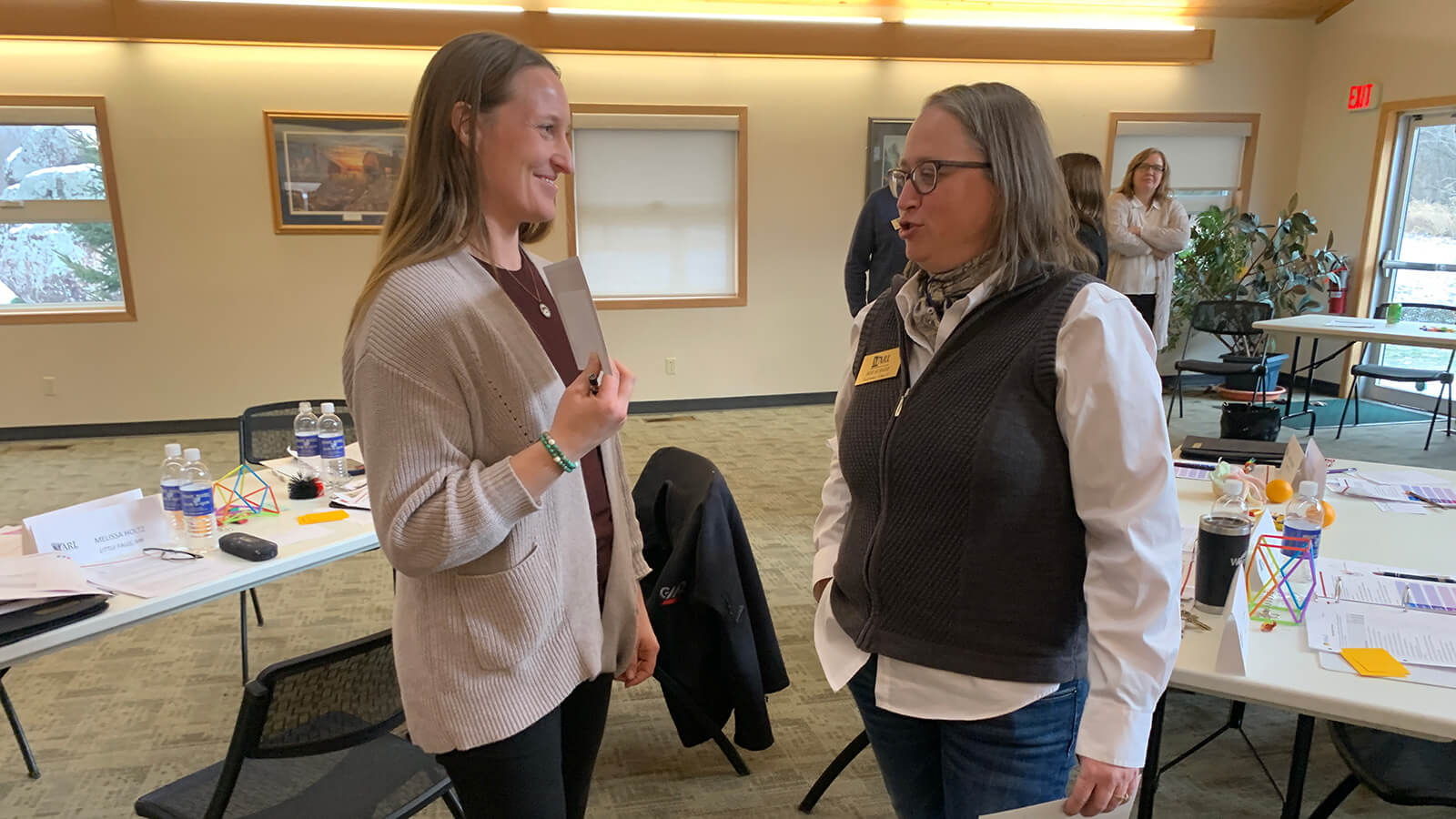
Minnesota Agriculture & Rural Leadership (MARL) Class XIII—30 farmers and agriculture professionals from across the state—shared fictional backstories about stock photos they’d been handed.
After a few minutes, Program Manager Toby Spanier asked the group to swap photos, find new partners, and retell the stories they had just heard. Laughter filled the room again as participants tried to recall details—often with mixed success. Spanier had them repeat the process one final time before gathering for a debrief.
Lighthearted on the surface, the exercise carried a deeper purpose: priming the group for a discussion on active listening. Over the next hour, Spanier led participants through conversations about nonverbal communication and the kinds of questions that foster genuine connection. The class wrapped up with a listening activity designed to help participants engage more thoughtfully with one another.
The session reflected MARL’s broader approach to leadership development—engaging participants in reflective, hands-on experiences that help them grow as communicators and community leaders. Minnesota Corn farmer-leaders say that approach is one reason the organization has proudly supported the program since its inception in 2000.
Each year, Minnesota Corn invests
checkoff dollars in programs that invest in people—programs like
MARL,
4-H, and
FFA that strengthen the fabric of rural communities. Those investments have helped countless young people and professionals build the skills and confidence to lead in agriculture and beyond.
Minnesota Corn Research & Promotion Council Chair John Mages said that’s an investment that pays off far beyond individual participants.
“Investing in leadership development might not increase yields, but it’s still one of the best investments we can make,” Mages said. “It’s what sets us up for long-term success— both in our industry and our communities.”
Mages said programs like MARL, FFA, and 4-H equip students and farmers with communication, collaboration, and decision-making skills that directly strengthen agricultural leadership at both the local and state levels. Many alumni go on to serve on commodity boards, county associations, co-ops, and civic organizations, he noted. They also become better advocates for agriculture by improving their ability to tell their stories, build relationships, and engage on broader public issues.
“These experiences allow participants to connect with consumers, policymakers, and media in ways that build trust and understanding of modern farming,” he said.
Helping more Minnesotans understand agriculture
In addition to developing leaders within agriculture, Minnesota Corn also invests checkoff funds in programs that build greater understanding of farming among the nonfarming public. That includes
Minnesota Agriculture in the Classroom (MAITC), a statewide program that increases agricultural literacy among K–12 students by integrating agriculture into core subjects like science, social studies, math, and language arts.
Founded 40 years ago, MAITC provides educators with agriculture-focused lessons, professional development, and classroom materials. It’s housed within the Minnesota Department of Agriculture (MDA) and operates in partnership with the
Minnesota Agriculture in the Classroom Foundation, a nonprofit that coordinates private-sector and commodity-group support— including from Minnesota Corn, which has partnered with the organization for more than 35 years.
MCGA board member Angela Guentzel said she’s confident the organization’s investment in MAITC is money well spent. “Our mission at Minnesota Corn is to promote the farmers themselves, but also to promote the story of agriculture,” she said. “Minnesota Ag in the Classroom is always a top choice because they’re making a difference.”
In 2025, MAITC has
engaged more than 158,000 students in 88% of Minnesota school districts through its programs and resources, including over 107,000 students via its AgMag magazine series. It also reaches students through virtual field trips, online curriculum, and the
Farm Camp Minnesota program—a three-part experience that includes a farm visit and a discussion of agricultural careers.
More than 1,000 students in 21 counties have participated in Farm Camp Minnesota this year, according to program director Brandi Wulkan.
Beyond student engagement, MAITC also provides teachers with professional-development opportunities such as the
Summer Teacher Tours, which give educators firsthand exposure to farms and agricultural businesses across the state. New in 2025, MAITC launched its “25-for2025” cohort in conjunction with the National Agriculture in the Classroom Conference held in Minneapolis. The 25 Minnesota teachers selected received scholarships to attend the conference and will gather three times this year for seminars exploring key issues facing Minnesota farmers.
Together, programs like MARL and MAITC reflect Minnesota Corn’s long-term commitment to people—developing leaders, deepening understanding, and strengthening the future of agriculture across the state.
Learn more about Minnesota Corn’s support of agricultural education and rural communities at Learn more about Minnesota Corn’s support of agricultural education and rural communities at
mncorn.org/outreach.